
Parent estrangement can feel confusing, heartbreaking, and impossible to understand. This guide explains why your adult child may have pulled away, what makes the pain so overwhelming, and how to begin healing even when you have no clear answers.
It Often Begins With Confusion
A parent sitting across from me, eyes wide, voice heavy, says quietly, “I don’t understand. We gave them everything. We sacrificed so much so they could have the best. Good schools, family vacations, lessons we could barely afford but somehow made happen. We went without. We worked long hours, sometimes in another city, another country, just so they could have more. I thought we did everything right.”
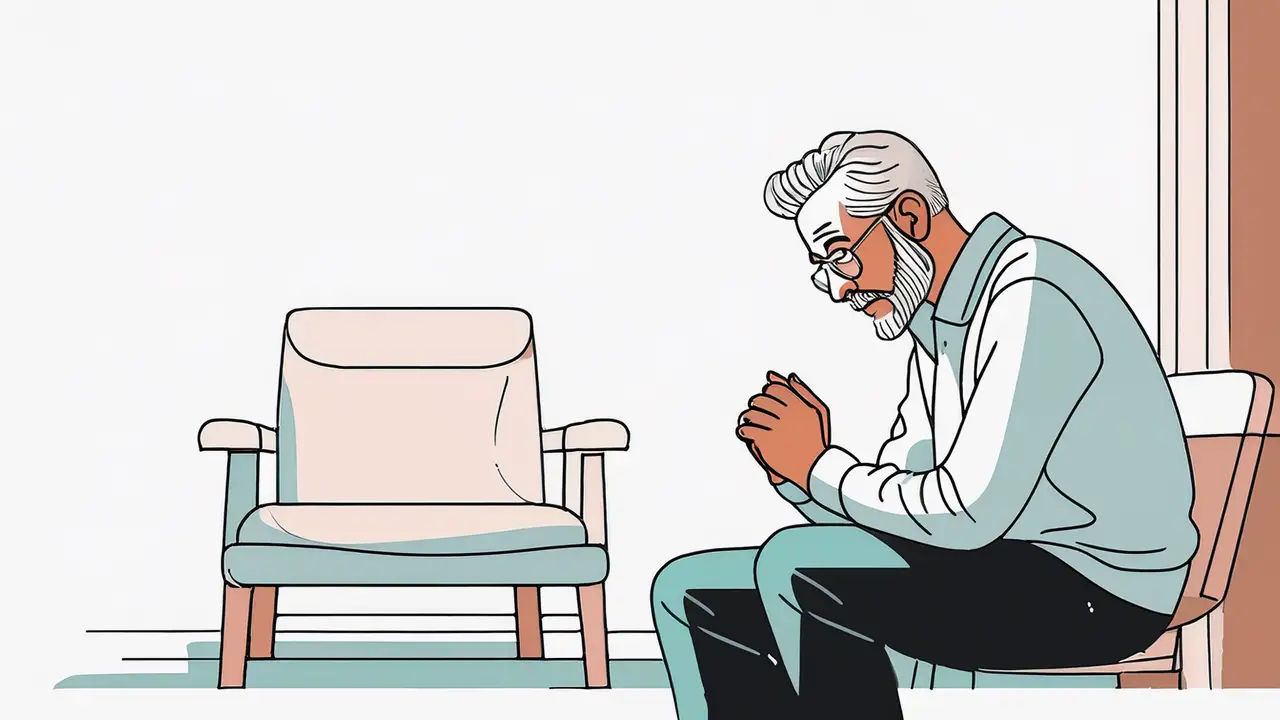
And then, without warning, comes the unexpected silence. The unanswered texts, the polite but distant responses, the empty chair at Christmas. Sometimes it’s not silence at all, but criticism: being told they did everything wrong. That they were too strict, too distracted, too focused on one child and not enough on another. That they were emotionally immature, unavailable, or unable to listen.
For many parents, estrangement from an adult child or parent estrangement, begins as a small rift that quietly widens until it feels like an earthquake. Once the distance becomes final, it’s shocking and disorienting. One day, you’re still telling yourself the story of a family held together by love and sacrifice. The next, your adult child has stepped back, sometimes with reasons that feel incomprehensible, sometimes without explanation at all.
Most parents spend months or even years replaying the past, searching for the moment when everything went wrong and wondering how they could be held to such an impossible standard. They recount their fairness, their good intentions, their effort. They list the sacrifices: the long hours, the late nights, the ways they tried to meet each child’s needs in their own way.
But their children often remember the story differently. Some recall being the “easy one,” the child who needed less and therefore received less. Others remember a sibling who always seemed to get more time, more protection, or more patience. A few describe growing up in a home where everyone had a role—peacemaker, problem, golden child—and those roles never changed, no matter how old they got.
By adulthood, those memories take on new meaning. Once children begin to form partnerships, build families, or become parents themselves, they often see their upbringing through a sharper lens. They want to do things differently. They want peace, autonomy, and space to build a life that doesn’t repeat what hurt them. For some, that means setting boundaries. For others, it means distance or silence. And for a few, it means complete disconnection.
Why Parent Estrangement Feels So Shocking
Part of what makes parent estrangement so painful is that the narrative simply doesn’t match the one parents have lived by. They see themselves as protectors and providers, people who gave their best and loved deeply. And they did. But love isn’t always received in the way it’s intended. Sometimes the way we give love doesn’t align with the way our children needed to feel it.
The pain deepens because there’s rarely a clear conversation or moment of closure. Relationships don’t end with an argument; they fade into distance. Messages go unanswered. Invitations are declined. Holidays pass in silence. For many parents, the not-knowing or lack of understanding, is worse than any explanation could be.
They often tell me they feel ashamed or embarrassed, unsure how to talk about it with anyone. They wonder how they went from a family that once felt close to one that can’t even share a dinner table. They scroll through photos of smiling families online and wonder what they missed.
This is the quiet grief of parent estrangement, one that lives in the background of every day, one that rarely gets acknowledged, one that leaves parents replaying conversations and asking themselves, How did it come to this?
Two Stories, Both True
It’s easy to stay anchored in your version of events, the one where you gave everything and received distance in return. That story makes sense because it’s true. You did give everything you had.
But your child’s story can also be true.
Estrangement from a child isn’t always about punishment. Sometimes it’s an act of self-preservation. Your child’s distance might not be rejection, but an attempt to heal something they don’t yet know how to talk about. It might be a way of creating safety or redefining who they are outside the family structure. It might even be a way of breaking a generational pattern they couldn’t name until now.
Holding both stories at once, the one you lived and the one your child remembers, is incredibly difficult. But this is often where healing begins.
What You Can and Can’t Control
When you’re estranged from your son or daughter, every instinct tells you to fix it. You want to reach out, to explain, to make them see how much you love them. But reconciliation can’t be forced. There’s no perfect argument or proof that will make someone ready to reconnect.
What you can do is shift how you hold the story. You can stay open and curious instead of defensive. You can reflect on your role without falling into shame. You can keep the door open, not as a demand, but as an invitation.
If you decide to reach out, do it gently and without expectation. A brief note, a simple “thinking of you,” or a card at a holiday can communicate love without pressure. No explanations. No guilt. Just love.
Sometimes that’s enough to plant a seed. Sometimes it isn’t. But either way, the work that follows is your own. Healing after estrangement doesn’t begin with reconciliation; it begins when you learn to live in a new reality, one that honors your love but doesn’t depend on your child’s response to it.
Over time, you may find that silence itself becomes a teacher. It can invite humility, patience, and self-reflection. It can help you see where your need to be right may have overshadowed your ability to be present.
Coping means learning to hold both the loss and the possibility, the grief of what’s gone and the quiet hope for what might still be possible someday. Parent estrangement is painful and isolating, and it can last for years. But it doesn’t have to define you. You are still a parent. You are still capable of growth and love. You can still create meaning in your life, even without resolution.
Sometimes reconciliation with an estranged child happens slowly, after time and perspective soften both sides. Sometimes it doesn’t. Either way, healing remains possible. Estrangement isn’t always the ending we imagined, but it can be the beginning of a different kind of work; one that leads toward self-understanding, compassion, and love that exists even without recognition.
FAQ: Common Questions About Parent Estrangement
If you’re reading this because you’re living in that silence and don’t know what to do next, you’re not alone. These are some of the questions I hear most often from parents who are trying to understand and heal.
Why do adult children estrange themselves from parents?
There’s rarely a single reason. Often, it’s a mix of unresolved pain, perceived unfairness, or a need for independence. Distance is sometimes a way of finding emotional safety, not a rejection of love.
Should I reach out to my estranged child, or wait?
Gentle outreach is fine, but only without expectation. One short message that expresses love and respect for their boundary is enough. Repeated contact or persuasion can make things worse.
How do I cope if my child never wants reconciliation?
Allow yourself to grieve. Seek support through therapy, coaching, or a trusted group. Focus on building a meaningful life. Healing doesn’t depend on reunion.
Is estrangement always permanent?
Not always. Time, maturity, and reflection can reopen communication. But reconciliation is a gradual process, not a single moment. It begins with empathy, not persuasion.
Finding Support and Healing After Estrangement
If you’ve been searching for how to cope with parent estrangement, know that you’re not alone. I work with parents who are ready to step out of shame and confusion, understand what’s happening, and begin to heal in a way that honors both their story and their child’s.
Learn more about coaching and workshops for parents navigating estrangement.


I am estranged from my parents…chiefly, my father (mother by default and due to lesser abuse over politics and religion): since as long as I can remember, I was abused psychologically, emotionally, physically…frequently threatened and intimidated with great intent, even as young as three. My parents married at 16 years, 1 month (mother, pregnant) and 18 years, 10 months (father, biological). They married due to delusional fantasy, we all lived in poverty. They bore and raised 3 kids together; what they did not know was that their son (myself) had undiagnosed autism (I received a diagnosis at age 52). I was ridiculed, taunted, ostracized by my father frequently and often; he considered physical abuse my lot for being as I was, even threatening with kicking me out of the house between the ages of 6 and 18. I thought things would change after I became an adult and moved out. All that changed was that there was no longer physical abuse; the rest remained. It carried into my relationships with my two siblings. After I reviewed my life objectively at age 58, I saw what was going on…and left EVERYONE behind. I “[took my] fast car and [kept] on driving”. I then changed my name and phone number. There is nothing more I can do except live my life, lean on my friends and be of positive help to them…and pass on. 58 years was more than enough time to wait and see if there would be any change. There’s no use in wasting the rest of my life. Some things simply cannot fix.
Thank you for sharing such a painful and personal history. What you describe is not a simple disagreement or drifting apart, but decades of sustained harm. To endure and carry this for so long and then come to a clear-eyed understanding of what was happening, and what was not changing, requires a tremendous amount of courage and self-awareness.
We live in a culture that often idealizes family while ignoring the reality that some relationships are deeply unsafe. The pressure to endure, forgive, or blame ourselves can be powerful, especially when the wounds began in childhood. Choosing distance after years of hoping for change is rarely impulsive; it is often the result of careful reflection and survival.
While estrangement can be painful, protecting your remaining years and investing in healthier connections is a huge act of strength and integrity. I hope this next chapter brings you steadiness, dignity, and relationships that are reciprocal and safe.
I greatly appreciate that. As part of my decision, I bought a cremation plan, left an instruction sheet for a friend with clear instructions for the disposition of my ashes…and to let people know not to inform my estranged family. When there’s no living left, I want to go quietly…anonymously.